Monday, August 15, 2016

Laura Ingalls Wilder & My Love for Little House on the Prairie

Ever since I was a little girl, watching Little House on the Prairie, reading the books and pretending I was Laura Ingalls - I’ve been in love with the history of the settlers of North America, and everything related to pioneer times.

Laura Ingalls Wilder
My dream is to someday make the journey to where Laura Ingalls was born, the places they settled and where she is buried.  For some reason I’ve never understood, I’ve always felt a connection to her.  The books she wrote later in life, based on her childhood were favourites of mine growing up, and I read them more times than I could count.

While the TV series wasn’t entirely accurate about her life, (the series is based around Walnut Grove, which she had in truth only lived for a short time, for example), it generated a love for the life these early settlers lived.  They lived in a time that was so hard to imagine, yet so simple that I sometimes long for the chance to live in those times.

Family was the most important thing to these early pioneers.  There were no TV’s, no phones and no electronics that take up so much of our lives now.  After supper, they all sat down together as a family, the kids would play together outside, or they would likely have sat and listened to stories - after they’d done their chores.

I know the times were likely so difficult, and such a struggle for them to survive.  But, I try to imagine a cold winter night, around the fire with the family talking and playing together.  Maybe some of the kids would be reading a book.

Compared to today’s lifestyles, with kids being rushed to different activities each night, with no one sitting down to eat supper together.  And, then when they are home, the kids and parents are all involved in their own devices - Facebook, texting, watching Youtube.  No one just unplugs and enjoys each others company any more.

Road leading to our getaway place
Every summer, my family spends time out on an acreage of land my father owns.  There is no power (except for generators to recharge batteries), no running water and it’s entirely set away from the rest of the world.  I love spending time there, and so do my kids.

We go for walks, we listen to the coyotes at night (which we admittedly don't really enjoy!), look at the stars around our bonfire - and I sometimes imagine we are transported to a different time when family was the most important thing in life.

I know Laura Ingalls would have had such a hard life as a child growing up back then, but I also believe she was able to be a part of a time we can never get back.  A time before electronics and social activities became such an important part of our lives.

Things may have been more difficult, and most of us from today’s world could never survive how they lived.  But, they lived in a simpler time that we could all do well to go back to.  A time when family and neighbors helped each other, and no one needed to have more or better than each other.

Do you think you could survive as a settler as Laura Ingalls family did?  Are you a fan of the Little House on the Prairie books and TV show?

Let me know if you’ve been one of the lucky ones to see some of the Laura Ingalls museums and sites - I would love to hear about them!

PS - If my mom or anyone who might be wanting to get an idea for birthday or Christmas gifts is reading…the Little House on the Prairies TV series is available on Amazon…hint, hint…


Find Kay P. Dawson…

"Ella's Embrace" - Now Available!
Kay P. Dawson’s first mail order bride series, Wilder West, is available on Amazon.  Her new series, Oregon Sky, features the Wallace family who have settled in the Willamette Valley.  The first three books in the series are available now!


Kay also has a fun FB group just for fans - you have to request to join, so send your request to https://www.facebook.com/groups/kaypdawsonfans/

Join us for some fun discussions, great contests and special offers just for fans of Kay P. Dawson.

**Get a free book by signing up for the mailing list at http://www.kaypdawson.com/p/newsletter.html

Click here to share this post...


Sunday, August 14, 2016


Congratulations Paula B! 


Please contact me at
kathryn (at) kathrynalbright (dot) com 
and I will get a copy of my newest release, 

Thanks for participating!


Friday, August 12, 2016

Antique Trunks

By Kathryn Albright
On a recent trip for a writing convention, I pulled out my tried and true burgundy suitcase to pack. The canvas luggage is a good twenty years old and any trip now the zipper will likely give way and my unmentionalbes will be spread across some landing tarmac. It seems things aren't built to last anymore--not like in the 1800s when not suitcases, but trunks and carpetbags were the main mode of  storage for travel.

A Cabin or Steamer Trunk --
half the size of a regular trunk.
I have a passion for antique trunks. I guess it has something to do with wondering about the stories they could tell of the places they've been. On a steamship crossing the Atlantic? Ellis Island? Or on a wagon train making their way across the Rockies. It intrigues me. Plus, the restored ones from the late 1800s are so very beautiful.

Even though trunks have been around since pre-medieval times, it was between 1870 and 1920 that trunk manufacturers had their heyday here in America. A trunk-maker is called a malletier. A few well-known manufacturers were C.A.Taylor, Haskell Brothers, Crouch & Fitzgerald. Two trunk makers from the 1800s that are still making trunks today are the Seward Trunk Co. and the Shwayder Trunk Co. (now known as Samsonite.)

Oak slat trunk made by Martin Maier
The wood used for the box of the trunk was most often pine and sometimes poplar. Skins in the 1700s and early 1800s and then canvas in the 1800s was then stretched over the frame. Then the staves--strengthening slats in elm, oak, or ash--were positioned. Trim and hardware came next made in brass and iron. The entire trunk was then coated with a layer of shellac for protection that would make the material virtually water-proof. All trunks had a tray inside for smaller items. On earlier trunks, the inside was lined with newspaper or hand-decorated paper. Later, material was used.  

Although flat-top trunks have been the mainstay due to their functional shape, dome-topped trunks (also called Camelback or Humpback trunks) also enjoyed a run of popularity. Some believe they came about because people didn't want their trunks buried under a stack of other trunks. Porters however, simply turned the domed trunks onto their sides to bypass that obstacle. Other styles of trunks include round, bevel-top, barrel-staves, and monitor trunks. The popularity of the various styles usually lasted only a decade or two which is a helpful bit of information when trying to date an old trunk.
Saratoga Trunk
The trunks at the start of the century were made from skins--deer, horse, cow, or seal--over a wood frame. They had little embellishment on the outside other than brass nails. They were build for practical functionality. Two hide round trunks of note can be seen at Mt. Vernon, property of George and Martha Washington.

In the late 1840s, Gold Rush Trunks (sometimes called Stagecoach Trunks) were popular. These flat-top trunks were leather-covered with iron bands and large brass studs (to symbolize the gold nuggets.)

Wardrobe Trunk
In the 1850s, the Jenny Lind trunk was the much-sought-after trunk. Jenny Lind came from Sweden to North America for a two-year singing tour arranged by P.T. Barnum. She was the most popular singer of the 1800s and along with trunks, doll furniture and even buildings and towns were named after her. A Jenny Lind trunk had a unique style. When see from the end, it resembled a loaf of bread or a key-hole.

In the 1870s, Saratoga Springs was "the" place for the elite to partake of the healing waters and to vacation. The well-to-do would take the largest, fanciest trunks made. These trunks came to be known as Saratoga trunks.

Along with the traditional traveling trunks malletiers also manufactured doll trunks, wardrobe trunks, wall trunks and steamer or Cabin trunks. Steamer trunks are half the size of a regular trunk so that it can fit beneath a berth on a ship or a train. 

I hope you have enjoyed this abbreviated post on one of my passions. If you have an old trunk and want it to keep its value--don't paint it! Find out how to restore it instead! Whenever I take my suitcase out of storage, I say a prayer of thanks that all luggage now come with wheels. I remember when it didn't. What's the old saying? "They can send a man to the moon, but they couldn't figure out to put wheels on luggage..."  I sure glad  that has now been figured out!

I'm traveling today, and so will not be able to respond to any posts, but rest assured that I will check all comments tomorrow!

Leave a comment for a chance to win on a drawing of my latest book

 Western Spring Weddings


Thursday, August 11, 2016

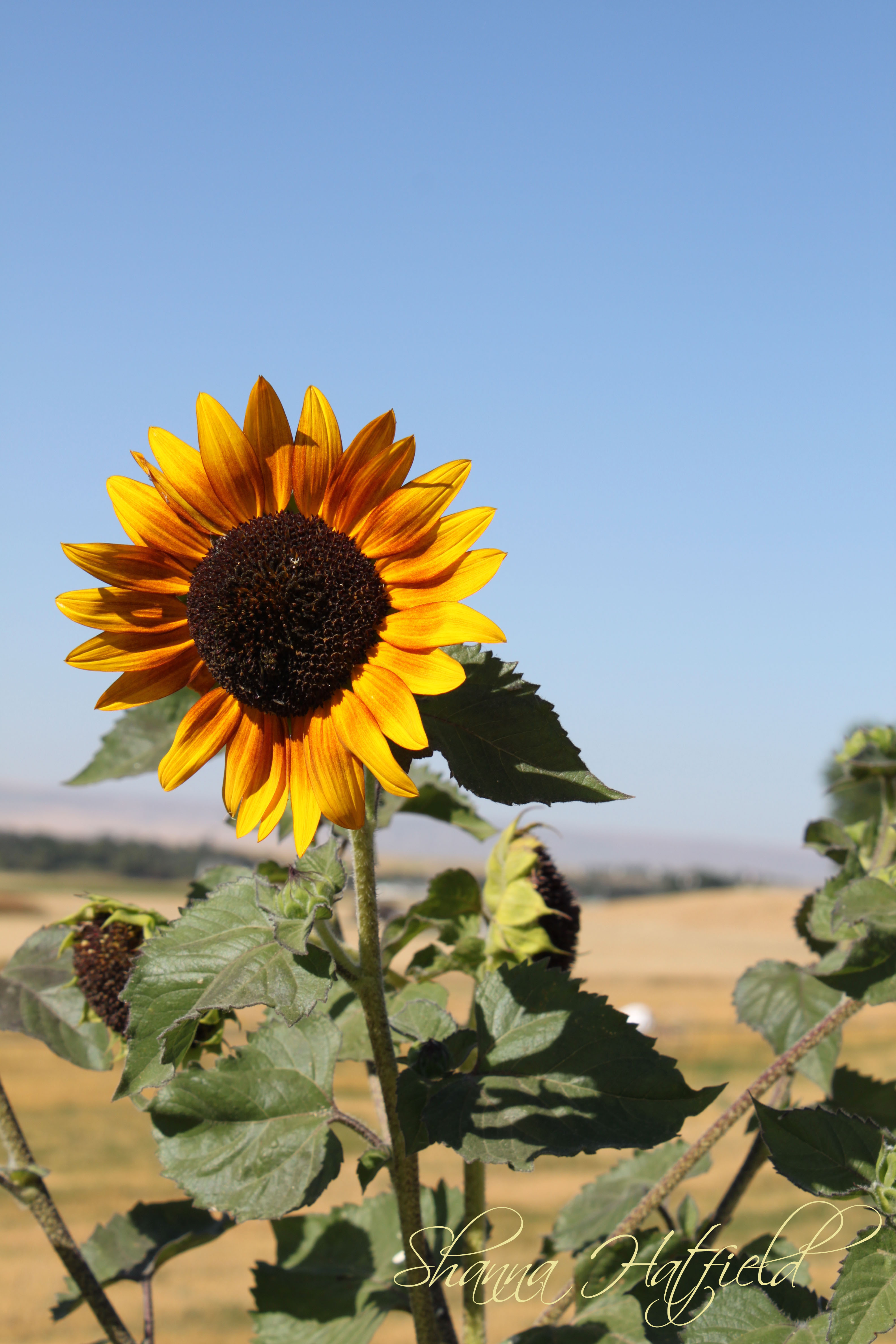
Sunflowers

by Shanna Hatfield

I don’t know what it is, but there is something about sunflowers, particularly against the backdrop of wheat fields and blue sky that just screams summer to me.

It probably harkens back to the days of my childhood when wheat harvest was an important part of the summer activities I tried to avoid. The edges of the fields often had volunteer sunflowers waving their bright little heads in the breeze. I always thought they were cheery and fun. My dad thought they were just one step above noxious weeds.


To me, sunflowers are nostalgic and old-fashioned, bringing to mind simpler times.

Sunflowers have been around for centuries. In fact, they started in North America but commercialization of the plant took place in Russia.


 Evidence suggests that sunflowers were cultivated by Native Americans in present-day Arizona and New Mexico around 3000 BC. A few archaeologists even suggest sunflowers may have been domesticated before corn.

Sunflowers were used in many ways throughout various tribes. Seed was ground into flour for cakes, mush or bread. Sometimes it the meal was mixed with vegetables such as beans and squash. Seeds were also cracked open and eaten for snacks. Sunflowers were also used for dye, and medicinal treatments. The oil of the seed could be used on skin and hair. Dried stalks were sometimes used in building material.
 
 
Spanish explorers carried the plant to Europe around 1500. Sunflowers were used throughout present-day Western Europe mainly in an ornamental capacity, although there were also some medicinal uses.
In the early 1700s, an English patent was granted for squeezing oil from sunflower seeds.

 By 1830, the manufacture of sunflower oil was a commercial enterprise. The Russian Orthodox Church increased the popularity of sunflowers by forbidding most oil foods from being consumed during Lent. However, sunflowers weren't on the list of prohibited items and soared in popularity.


Russian farmers were reportedly growing more than two million acres of sunflower in the early years of the 19th century. During that time, two specific types emerged — one based for oil production and another variety for direct consumption.
 
The late 1800s saw a return of sunflowers to the United States. Seed companies advertised the 'Mammoth Russian' sunflower seed in catalogues. This particular seed name was still being offered nearly 100 years later. 
 
The next time stop to admire a cheerful sunflower blossom, think about the circuitous route it took to get there.
 
~*~ 
  
Convinced everyone deserves a happy ending, USA Today best-selling author Shanna Hatfield is out to make it happen, one story at a time. Her sweet historical and contemporary romances combine humor and heart-pumping moments with relatable characters.
   When this hopeless romantic isn’t writing or indulging in rich, decadent chocolate, Shanna hangs out with her husband, lovingly known as Captain Cavedweller.
Contact the Author:
Find Shanna’s books at:

Shanna loves to hear from readers. Follow her online at:

Tuesday, August 9, 2016

A Family Saga over Three Generations and Six Decades!


The newest offering of the beloved Texas Romance family saga, AT LIBERTY TO LOVE, delivers it all. It is a stand alone, but as in any series, all the more enjoyable when the previous stories are read in order. This book seven in the series takes you on a journey from Texas to California, delivering romance fraught with obstacles. Readers who've enjoyed the series met the heroine as a nine years old back in 1832, but thirty-three years have passed, and life hasn't always been kind.

Jacket Copy:
Obedience is better than sacrifice…and trumps romance, no matter how sweet.
   Profound loneliness propels a childless widow west with the idea of choosing an orphan to share her life. On the way, a fellow traveler takes her by surprise. She never dreams, is unprepared, doesn’t need another man, but can’t get him out of her head…or heart. He’s so perfect—every bit the one she’d searched for as a young woman—except his mistrust of God has erected a wall she cannot breach.
    Marcus Ford blames God and struggles for peace after losing his wife and baby. Not once has he considered another woman could be the answer, but the widow is like none other he’s ever met. He falls hard, but plans are taking him east. Hope dashed sends two hearts into the pit. If only Ford could forgive God or the widow ease up on her adamant resolve.
   Will God’s mercy shine a beacon in the fog of despair and prove sufficient to heal their souls?
 
Excerpt:
    Stepping off the last stair, she approached.
    He inhaled deeply then shook his head. “Oh my.” He drew in another long breath, closing his eyes. “You smell better than you look. I mean, you look outstanding, but your fragrance is even better. Not that you didn’t smell good before… I mean…” He finally just shrugged. “Your appearance shames me. I should have brought my dress blues.”
    “I understand, but here.” She handed him her door key, grinning. “On my couch, you’ll some new threads…the least Henry Buckmeyer could do.”
    At first, he didn’t take it, then scooped it up like a kid in a candy store and took the stairs two at a time.
    “I’ll wait on the deck, just outside the dining room.”
    Waving with one hand, he didn’t look back.
    Might do the man a bit of good to have his pride pricked. She chuckled, so enjoying the highly pleasant distraction he afforded.
    Took him longer than expected, but the wait was well worth it. The ready-made suit fit perfect. She loved the shirt’s high collar and how it seemed to choke him.
    He grinned then extended his arm. “Thank you.”
    Such the gentleman! She slipped her hand under then over his offering. “You’re welcome.” She glanced down. He’d shined his boots. Per chance that accounted for the extra time.

Reviews:
I don't know how Caryl McAdoo does it, but each book in this Texas Romance series just gets better! "At Liberty to Love" is book 7, and its message is "Obedience is better than sacrifice…and trumps romance, no matter how sweet."  This book is a must read.  I highly recommend this author and whole series. –Joy Roberts, Tennessee reader

Sweet Tweet: (Help spread the word! Just copy and paste :)

AT LIBERTY TO LOVE #ChristianFiction Family Saga #HistoricalRomance http://www.amazon.com/dp/1533016798 @CarylMcAdoo


Bio: Caryl McAdoo, loving God, currently writes four series: the historical Christian ‘Texas Romance’; a contemporary ‘Red River Romance’; The Generations, her Biblical fiction, and the newest Days of Dread Trilogy for mid-grade and young adult readers. Oft called the Singing Pray-er, she loves praising with new songs the Lord gives her and prays her story gives God glory!
    In 2008, she and her high school sweetheart-husband Ron moved from the DFW area—home for fifty-plus years—to the woods of Red River County. Caryl counts four children and sixteen grandsugars life’s biggest blessings, believing all good things come from God. Besides glorifying Him, she hopes each title will also minister His love, mercy, and grace to its readers.
    Caryl and Ron live in Clarksville, the county seat, in the far northeast corner of the Lone Star State with two grandsons.

Links: 
All Books    At Liberty to Love    BookBub    Website   Newsletter Blog                      
Facebook    GoodReads    Google+    LinkedIn    Twitter    Pinterest    Puzzle

YouTube (Hear Caryl sing her New Songs!)

Monday, August 8, 2016

Teddy Roosevelt Visits Yosemite National Park


In 1903, President Theodore “Teddy” Roosevelt visited Yosemite National Park. Guided into the Yosemite wilderness by naturalist John Muir, the president went on a three-day wilderness trip that started at the Mariposa Grove. 
 
Pres. Roosevelt, John Muir and the official presidential delegation at Grizzly Giant Tree in Mariposa Grove, Yosemite National Park
He also visited Sentinel Dome, Glacier Point, and Yosemite Valley among other points of interest in the park. Muir seized the opportunity "to do some forest good in talking freely around the campfire," and the President, referring to John Muir, is quoted as saying "Of course of all the people in the world, he was the one with whom it was best worth while thus to see the Yosemite."
 
President Theodore Roosevelt and his Official Delegation enter the part at Wawona
President Roosevelt, accustomed to being surrounded by enthusiastic crowds, wanted his experience to the park to be one of isolation and “roughing it.” For most of his journey he was accompanied by only four others: John Muir, two of the men hired as the first civilian park rangers in 1898, Charlies Leidig and Archibald C. Leonard, and a packer (Army packer Jacker Alder). President Roosevelt slept on a stack of forty wool blankets covered by a shelter half. Food for the party was cooked over an open campfire by Charlie Leidig.
 
Pres. Theodore Roosevelt leads party including John Muir, Charles Leidig, Park Ranger and cook, Archie C. Leonard, Park Ranger and Army packer, Jacker Adler
From Charlie Leidig’s Report of President Roosevelt’s visit: “On May 3/16, 1903, …they broke camp at Mariposa Grove and were on horses by 6:30a.m. The president directed Leidig to “outskirt and keep away from civilization.” Leidig led the party down the Lightning Trail. They crossed the South Fork at Greeley’s and hit the Empire Meadows Trail. They especially avoided approaching the Wawona Hotel for fear the President would be brought in contact with members of his own official party which had remained for the night at Wawona. They had a cold lunch on the ridge east of Empire Meadows. There was lots of snow as they crossed towards Sentinel Dome; they took turns breaking trail through deep snow. In the Bridalveil Meadows the party plowed through5 ft. of snow. The President mired down and Charley had to get a log to get him out. It was snowing hard and the wind was blowing.”


From Charlie Leidig’s report of President Roosevelt’s visit: “On May 4, the party went down to Glacier Point for pictures that had been prearranged….
 
President Theodore Roosevelt at Glacier Point
From Charlie Leidig’s report of President Roosevelt’s visit:

As they left Glacier Point, the President rode in front dressed in civilian attire. The rangers wore blue overalls, shaps and spurs. They went into Little Yosemite Valley for lunch. Here they encountered a considerable crowd of valley visitors, since it had been widely advertised in the papers that the President was visiting the park.
 
Pres. Theodore Roosevelt and John Muir at Glacier Point
There was considerable disagreement in the matter of plans for the Presidential visit. The President wanted a roughing trip and through Pardee, Wheeler and Muir such a trip had been worked out. On the other hand, Mr. John Stevens, Guardian of the Valley under State administration, and certain of the commissioners, especially Jack Wilson from San Francisco, had made plans for a large celebration. The Chris Jorgensen studio home had been set aside for the President’s official use. A cook had been set engaged from one of the best hotels in San Francisco to serve a banquet. The commissioner had arranged a considerable display of fireworks, which John Degnan claims amounted to some $1800 worth….
 
Yosemite National Park map
So there was considerable party awaiting the President at the top of Nevada Falls and Little Yosemite. The President requested that all the people be kept at a distance in order that he could carry out his desire for a “roughing trip”, so everybody was kept at a respectful distance.

When the party reached Camp Curry at 2 P.M., they found a big crowd of women in front of the camp. They had formed a line across the road in an attempt to stop the President. They all wanted to shake hands with him. Charlie Leidig states, he was riding second in line with a Winchester rifle and six shooter. His horse was a high spirited animal. The President said, “I am very much annoyed, couldn’t you do something?” Leidig replied, “follow me.” He gave spurs to his horse and as he reared, women fell apart and the President’s party went through the gap. The President waved his hat to the group in the road.
 
Camp Curry, circa early 1900s
…..Accompanied by five or six members of his party, the President walked back across the Sentinel Bridge to his horse. Muir had accompanied the President to the Jorgensen studio. The original party of five mounted their horses and started down the valley to pick a camp site near Bridalveil Falls where Muir had suggested they spend the last night in camp….They went down the south side of the [Merced] river followed by a big string of people on horseback, in buggies, surries, and others on foot. Leidig stated there must have been between 300 or 500, or possibly 1000 of them in the crowd, filling the Bridalveil Meadows. As they reached their camping places on a grassy slope just south of the present road through Bridalveil Meadows, the President said to Leidig, “These people annoy me. Can you get rid of them?” Charlie said he walked out and told the crowd that the president was very tired and asked them to leave. They went—some of them even on tiptoe, so as not to annoy their President.

When Charlie returned to the camp site the President said, “Charlie I am hungry as Hell. Cook any dam thing you wish. How long will it take?”

Charlie told him it would take about 30 minutes, so the President lay on his bed of blankets and went to sleep and snored so loud that Leidig could hear him even above the crackling of the campfire.

After dinner, Muir and the President went out int the meadow until way after dark. When they returned they sat around the campfire where the President told them of his lion hunting trips.

People came again in the morning. Crowds could be seen all through the brush. Leidig kept them away. The stage came down containing the President’s official party. After breakfast, the President and Muir got into the stage and as they left the President called Leidig and Leonard to him and said, “Boys, I am leaving you. Good-bye, and God Bless you.”
 
Pres. Theodore Roosevelt in rear seat on way to Inspiration Point, Yosemite National Park
Roosevelt is quotes as saying, "There can be nothing in the world more beautiful than the Yosemite, the groves of the giant sequoias...our people should see to it that they are preserved for their children and their Children's children forever, with their majestic beauty all unmarred." While he was president, Theodore Roosevelt established five national parks, 18 national monuments, 55 national bird sanctuaries and wildlife refuges, and 150 national forests.

It has been my privilege as a volunteer in the Merced California Family History Center to have worked with sisters Lucille C. Davenport and Joyce C. Hammer, descendants of Park Ranger Archibald C. Leonard. With their permission, I will be telling a bit of their grandparent’s story in next month’s blog.

Sources:
Bingaman, John W., “Guardians of the Yosemite”http://www.yosemite.ca.us/library/guardians_of_the_yosemite/history.html


Charlie Leidig’s Report of President Roosevelt’s Visit in May, 1903


Theodore Roosevelt, The John Muir Exhibit, http://vault.sierraclub.org/john_muir_exhibit/people/roosevelt.aspx


Zina Abbott is the pen name used by Robyn Echols for her historical novels. The first four novellas in the Eastern Sierra Brides 1884 series, Big Meadows Valentine,  A Resurrected Heart, Her Independent Spirit, and Haunted by Love are now available.